Emotions & Yin Method
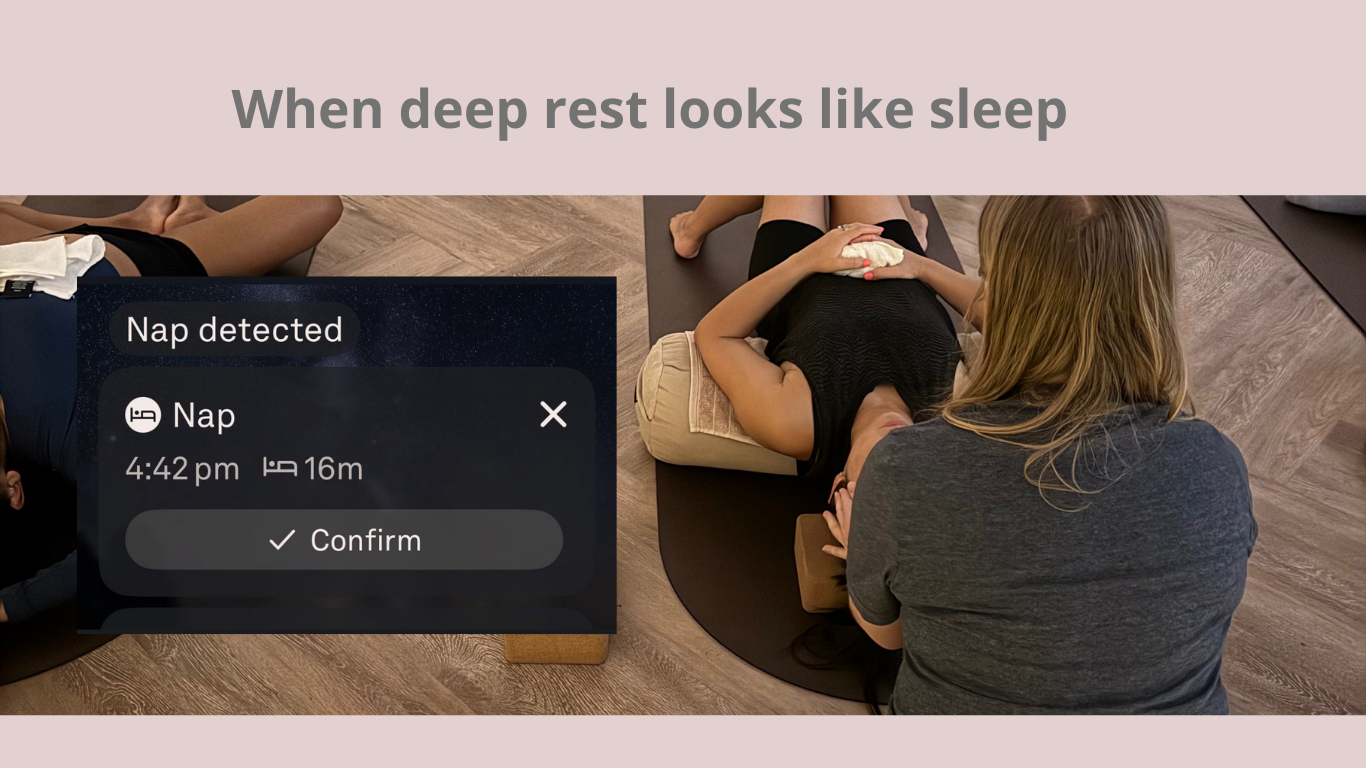
Last Saturday’s Yin - Sound - Reiki event participant sent me a screenshot from her Oura Ring app. It showed that she had taken a 16-minute nap during my class. I smiled immediately, because I knew the sequence and the timing so well. The “nap” happened right as we were completing the Yin portion and entering the first few minutes of the sound bath.
Her rest began when we started working with the heart. We tapped Heart 1 acupressure point, then settled into a reclined chest-opening, with a hot stone placed gently on the chest. Later, as I looked back through photos from that day, I noticed something beautiful. In one image, she was lying exactly in that moment, while our Reiki healer Claire was offering hands-on healing. At the same time, she later told me, she was silently practising a heart meditation given to her by her kinesiologist.
“So was I actually asleep?” she asked me. “Because I don’t remember sleeping.”
No, you weren’t asleep, I replied.
The difference between sleep and deep rest is subtle but important. In deep rest, the mind remains cognisant and aware, while the nervous system drops into profound regulation and calm. Meditation and Yin invite us into this awake resting state, where the body feels safe enough to soften completely.
This is exactly the intention behind the Emotions & Yin Method. We work with the body through Yin postures and hot stones, with emotions through sensing and feeling, and with the mind through breath, sound, and mindful awareness.
Her Oura Ring recorded a nap, yet her experience was one of presence. It was an awake moment, with a heart rate moving at a sleeping pace.
And honestly, I love it when science and hardware confirm what Eastern wisdom has known for centuries!
Our next event is on Saturday, March 7th.